Source: IStock
For anyone trying to understand why wind turbines keep getting bigger, cheaper, and harder to source parts for, the answer lies in one unglamorous corner of manufacturing: casting. Hubs, pedestals, bearing housings, gearbox casings, and tower flanges are the heavy metal components that hold a turbine together — and they are quietly one of the most consequential, least-discussed segments of the entire renewable energy supply chain. This report lays out what the 2026 data actually shows: where market-size estimates diverge and why, what's genuinely driving growth, and why the central story of the past year is no longer about exporting parts — it's about exporting factories.
Quick Facts: Wind Turbine Casting Industry (2026)
Why Casting Components Matter More Than They Get Credit For
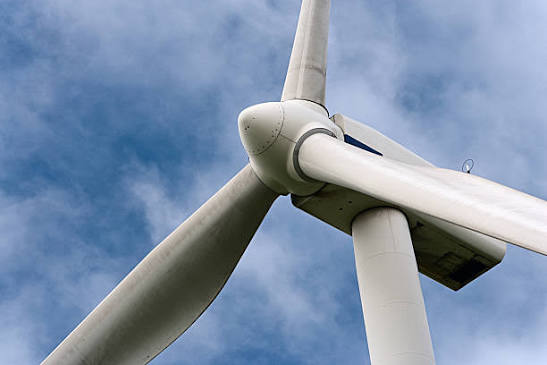
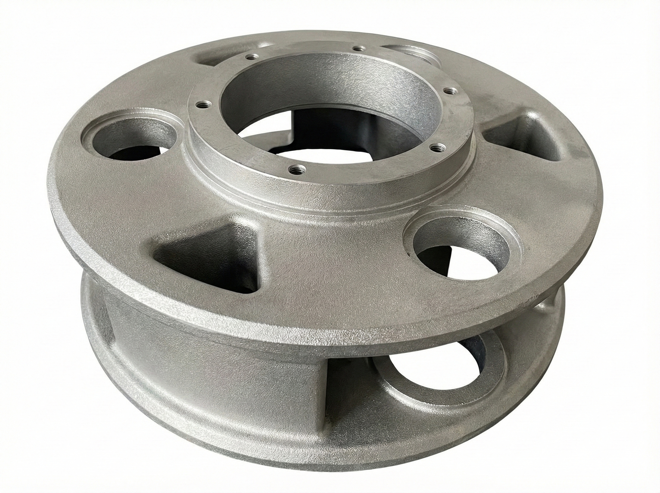
A modern wind turbine is, structurally speaking, a very large machine built around a handful of enormous cast metal parts. The hub connects the blades to the rotor shaft and absorbs the highest structural loads in the entire system. The base or pedestal forms the chassis the nacelle sits on. Bearing housings support the main shaft and the yaw and pitch bearings that let the turbine track the wind. Gearbox castings house the drivetrain's gear sets, and tower flanges bolt the tower sections together — a detail that matters enormously as turbines climb toward 15+ megawatts and offshore towers stretch taller and wider than almost anything else in industrial manufacturing.
These components are typically produced from ductile iron, grey iron, and steel — including both carbon and stainless-steel grades — chosen based on strength, corrosion resistance, and lifecycle criteria matched to environmental exposure and service expectations. That materials mix is shifting: as turbines get larger and offshore installations expand, foundries are being pushed toward heavier single-piece castings, higher-fatigue-tolerance alloys, and more corrosion-resistant grades — changes that ripple all the way up the supply chain, affecting how foundries are built, financed, and located.
What Is the Market Size of Wind Turbine Castings?
Search "wind turbine casting market size" and you'll get estimates ranging from roughly $2 billion to $12 billion. This discrepancy is not an error — it's a matter of scope. Narrow definitions (core heavy castings only) yield lower numbers; broad definitions (folding in more casting types, materials, and adjacent applications) yield much higher ones. Here is the data broken down by research firm and scope:
Research Firm |
Base Year Value |
Projected Value |
CAGR |
Scope Definition |
Global Growth Insights |
$1.97 billion (2025) |
$2.22 billion (2035) |
1.2% |
Core heavy castings only — hubs, pedestals, gearbox housings |
Research and Markets |
$2.44 billion (2025) |
$3.55 billion (2030) |
7.7% |
Standard wind casting— primary structural components |
Transparency Market Research |
$3.30 billion (2025) |
$11.80 billion (2036) |
12.4% |
Broad scope — wider casting types, materials, and applications |
Key takeaway on pricing: While unit volumes are climbing steadily as wind capacity expands, pricing on the commodity end of core castings is nearly flat — evidenced by Global Growth Insights' 1.2% CAGR figure. That's a real signal of margin compression even as the physical tonnage of metal being poured keeps increasing. A "$2 billion" claim and a "$12 billion" claim about this same industry aren't necessarily in conflict; they're usually just measuring different slices of the same value chain. Any number cited from this market should be read alongside its scope definition, not compared blindly against a differently-scoped figure.
What Is Driving Growth in Wind Power Casting?
Source: Kangshuo
Strip away the differing market-size estimates, and the fundamental growth drivers cited across research firms are remarkably consistent:
The 2026 Supply Chain Shift: From Exporting Products to Exporting Factories
Here is where the industry narrative has changed meaningfully over the past year — and it's arguably more consequential than any single market-size figure.
China dominates global wind casting and turbine supply, with industry commentary placing the country's share of key wind components (hubs, frames, blades, gearboxes, bearings) at somewhere around 60–70% of global production. What's changed is how that dominance is being monetized internationally. Through most of the 2010s and early 2020s, Chinese wind manufacturers grew overseas primarily by exporting finished turbines. That model is now visibly giving way to something more capital-intensive: building factories, R&D centers, and regional supply chains directly inside the markets they're selling into.
Major localization deals (mid-2026)
These three deals landed within weeks of each other, underscoring how quickly the "capacity export" model is spreading across new geographies — well beyond the more established Chinese wind footprint in Southeast Asia and Latin America.
The financial case for localization
This shift is driven by a real and measurable profitability gap between domestic and overseas operations. According to Goldwind's 2025 annual report, the company's international business gross margin reached 20.3% in 2025, up 10.45 percentage points year-on-year — while its blended wind turbine and components segment margin (covering both domestic and international sales) was 8.95%, up 3.9 percentage points year-on-year. International revenue reached RMB 18.082 billion in 2025, up 50.59% year-on-year, and now represents roughly a quarter of the company's total revenue.
That kind of margin gap gives both turbine OEMs and their upstream casting suppliers a genuine economic reason — not just a trade-policy one — to co-locate manufacturing overseas rather than exporting finished components. Shipping a finished turbine, or its heaviest cast components, from China to a distant destination market adds meaningful logistics cost on top of any tariff exposure, and localized production increasingly makes that cost avoidable.
What This Means for Casting Suppliers Specifically
This localization wave matters just as much — arguably more — for upstream casting and forging suppliers as it does for the turbine OEMs making headlines. When a turbine assembler builds a factory in Brazil, India, Egypt, or Oman, it creates both pressure and opportunity for the casting suppliers that feed that factory: either export components over greater distances at higher logistics cost, or co-locate foundry and machining capacity near the new assembly site. Given the margin data above, the economics increasingly favor the latter — and the suppliers that move fastest to follow their OEM customers overseas are likely to be the ones that capture the higher-margin business as it materializes.
Key Takeaways for the Second Half of 2026
Sources & Citations
1. Research and Markets — Wind Turbine Casting Market Report 2026. https://www.researchandmarkets.com/reports/5766762/wind-turbine-casting-market-report
2. Research and Markets — Wind Turbine Castings Market Size, Share & Forecast to 2032. https://www.researchandmarkets.com/report/wind-turbine-casting
3. Transparency Market Research — Wind Turbine Casting Market to Reach USD 11.8 Billion by 2036. https://www.transparencymarketresearch.com/wind-turbine-casting-market.html
4. Global Growth Insights — Wind Power Casting Market Size & Demand Analysis by 2035. https://www.globalgrowthinsights.com/market-reports/wind-power-casting-market-121239
5. Market.us — Wind Turbine Casting Market Size, Share | CAGR of 7.8%. https://market.us/report/wind-turbine-casting-market/
6/ Xinhua — China's SANY to build Egypt's first wind turbine plant, 2,000-MW wind project, June 25, 2026. https://english.news.cn/20260625/d4d69fc15933465bb78285a46e4d6ec2/c.html
7. Oman Observer — Contract awarded for Oman wind turbine project. https://www.omanobserver.om/article/1191035/business/economy/contract-awarded-for-oman-wind-turbine-project
8. Goldwind licenses technology, South Korea to build 16MW-class turbines, June 2026. https://m.bjx.com.cn/mnews/20260616/1500193.shtml
9. Overseas revenue up over 50%: Goldwind's 2025 net profit up nearly 50% to RMB 2.774 billion, March 29, 2026 — source for the verified 2025 international gross margin (24.29%, up 10.45pp YoY) and blended segment margin (8.95%, up 3.9pp YoY). https://finance.sina.com.cn/jjxw/2026-03-29/doc-inhssmvu7039492.shtml

Founded in 2010, Kangshuo Group is a pioneer in intelligent manufacturing for critical components, recognized as a National High-Tech Enterprise and a "Little Giant" by China's Ministry of Industry and Information Technology. Discover our expertise in new materials, innovative processes, advanced equipment, and tailored solutions for global industries.
H-1 Factory Building, Mingshan Industrial Park, Gaoping Economic and Technological Development Zone, Jincheng City, Shanxi Province, China.
Copyright © 2026 Kangshuo Electric Group Co., Ltd. All right reserved Privacy Policy
 EN
EN